
Mwaluganje Elephants Sanctuary
Elephants & Forest Conservation
If you want to make a difference and contribute to the nature by working towards conserving the African Elephants and their habitat this is an opportunity for you to step in. Mwaluganje Elephants Sanctuary is a community owned project that was formed to reduce Human Elephants Conflict.

Next start date: Volunteers can Join any time
Highlights:
- This program is open throughout the year and starts anytime
- Volunteer in Kenya with Elephants in their natural habitat
- Participate in activities that promote conservation of Elephants
- Undestand the rich cultures and traditions of Digo people living close to the Elephants
- Interact with youth and children with exchange on conservation of Elephants
- Enjoy a beautiful environment of Hills, Rainforest and white sand beaches of Kenya
- You will have opportunity to enjoy other wildlife like Lions, buffaloes, giraffes etc at the Shimba hills.
This program is Ideal for:
Volunteers who are interested in conserving Nature and Wildlife with love for animals, You’ll be supported by the local teams and placement staff so no working with wildlife experience is required.
What to expect and how you will make a difference
Mwaluganje Elephants sanctuary is a 32 Square kilometre area that was set aside by the members of community who gave up their farming land for the consrvation of elephnats. Before the community gave up the land conflicts arose btween the Elephants which used the land as a breeding zone and a migratory route and the famers who used the land for cultivation. Eventually farmers gave the land and are now dependent on tourist collection at the sanctuary gate. As a volunteer in this program you will work with the sancuary management to help reduce infrastrucural and administrative challenges that hinders the projects vision and objectives. You will work with rangers in the Elephants Sanctuary and Local youth Volunteers will also support you during your work.
Some of Volunteer activities include:
- Repair and maintenance of the gate fees collection offices
- Repair and maintenance of the Elephants sanctuary fence
- Repair and maintenance of the road within the Elephants sancuary
- Making paper out of Elephant paper dung for fundraising efforts
- Office work and marketing the sanctuary to attract more tourists
- Environment conservation awareness with a nearby school children
- Elephants sanctuary patrol for removal of snares to protect other animals present in the Sanctuary.
The aim of this project is for volunteers to provide their invaluable time and contribute through physical and mental support to the efforts of the locals community in conserving the nature.
Why you should take part in Forest & Elephants conservation volunteering
When you volunteer in Forest & Elephants conservation in Kenya you’ll be adding value to the local community, global climate impact while also developing personally and professionally by:
- Promoting environment conservation which impacts on climate change Globally
- Helping local populations appreciate what they have and take part in protecting it
- Helping in elimination of poaching of Elephants and other animals by promoting alternative income sources for locals
- You will help in Imparting knowledge to young school going children and promotion of cultural exchange
- You will Immerse yourself in rich Kenyan cultures and traditions in a special way
- You will discover Kenya’s rich heritage, history and its varied beautiful landscapes and wildlife
Volunteer requirements
- Volunteers must be of 18 years and above
- All volunteers are required to provide a criminal background check to Siriafrika Ecoventures prior to departure. If unable to obtain a criminal background check, volunteer can provide two character reference letters instead
- All volunteers are required to have adequate travel insurance
- Volunteers should be able to communicate prefferably in English or Swahili and be ready to learn new language.
- No working with animals skills is required however volunteers can communicate their skills prior to arrival, in case of any special duties that maybe required in the placement these skills can be utilized.
Location
The Mwaluganje Elephants Sanctuary is a northern extension of the Shimba Hills National Reserve in Kwale, its approximately 22km north of Kwale town, covering an area of 36km2. It lies at an altitude of 440 feet above sea level.
The Golini Escarpment serves as the eastern boundary of the sanctuary. Mwaluganje Forest Reserve to the east is a plateau of approximately 30km2 and 500 feet above sea level. The average annual temperature of the area is 24.2C.
Arrival and orientation
With prior arrangements volunteers will be picked from Moi International Airport in Mombasa or the Standard Gauge Railway (SGR) Mombasa Terminus. Volunteers will be picked up with one of Siriafrika Ecoventures local project coordinators and driven to their host family for relaxing and overnight stay.
Orientation will take place the next day at the host family and the Elephants sanctuary where volunteers will familiarize themselves with the community and the sanctuary staff and scouts they will be working with.
Volunteers who would like to have city excursions in Nairobi or Mombasa before starting work or activities at the placement just let us know about it during registration so that Siriafrika Ecoventures can make arrangements accordingly.
Typical Volunteer Schedule
First Day On your first day of volunteering, you will be introduced to the placement staff you will be working with meet the children at the school familiarize with the facility and the surrounding institutions. | |
WEEKDAYS SCHEDULE (MONDAY – FRIDAY) Work and break times are dependent on each project and placement. A typical volunteer day would be as follows | |
TIME DURATION | ACTIVITY |
07:00 – 08:00 HRS | Breakfast at accommodation |
08:00 -10:00 HRS | Work as per schedule at the placement |
10:00 -10:30 HRS | Tea or refreshment break |
10:30 – 13:00 HRS | Work as per schedule at the placement |
13:00 – 14: 00 HRS | Lunch break with lunch provided at the placement |
14:00 – 17:00 HRS | Work ends. Volunteers are free to relax, prepare for the next day or do some shopping |
20:00 HRS | Dinner at homestay |
WEEKENDS During the weekends, volunteers have spare time and usually relax or take the opportunity to explore other parts of southern coast. Volunteers can visit Shimba Hills National Reserve, Kaya Forest, Diani Beach, Colobus Monkeys Conservation, Wasini Marine Park etc Long weekends can be taken to travel further afield to destinations, such as Mombasa and Malindi for a beach holiday experience with other Mombasa attractions such as the Fort Jesus, Haller Park and the Mamba village etc | |
Accommodation
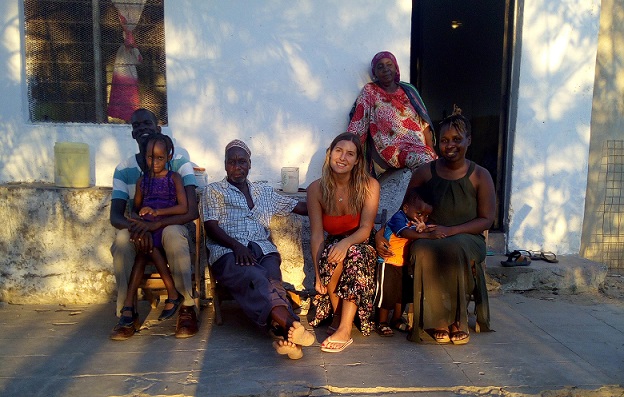
Volunteers are accommodated in a homestay with a local family. It is exciting to stay with a family, as this is an opportunity to learn the Kenyan way of life, meet local people, eat local food, speak the local language (Kiswahili & Kidigo) and engage in local customs and traditions.
Living is basic, yet still comfortable, and most homestays have electricity. You can expect to share a room with other volunteers, however in some homestays volunteers have their own rooms. It is important to note that Kenyan homes have a shared living environment in which couches – are used for sitting and dining.
Bedding is provided, but it is recommended you bring your own towel and toiletries, as well as a sleeping bag if you wish to travel on the weekends.
Wi-Fi is not available in the majority of the homestays in the village. To keep connected, you can purchase a local SIM card with data for an unlocked mobile phone.
Meals
The wide range of Kenyan tribes, ethnicities and cultures are reflected in the diversity of the local cuisine. Volunteers are provided with three meals a day which are served at the accommodation and tend to be rich in carbohydrates.
Breakfast is served around 7am and generally consists of Chai tea, toast, fruit and sometimes mandazi – African donuts. A typical lunch can include vegetables with rice, occasional meat and fruit . If you are not returning home from your placement for lunch, you will need to pack your own lunch in the morning. Dinner usually includes traditional food, such as ugali-a cornmeal; Mboga, a vegetable dish, mashed potatoes with peas and corn, meat and vegetables.
Tap water is not safe to drink without treatment or boiling , though bottled water is readily available. Volunteers typically drink about two liters per day, which adds up to cost around US$10 a week.
If you have any special dietary requirements, please make a note on your application so arrangements can be made. However, it is important that volunteers should not expect to eat as they normally do at home.
Pricing
|
DURATION |
PROGRAM FEE |
INCLUDED IN PRICE |
NOT INCLUDED IN PRICE |
|
2 weeks |
$700 |
|
|
|
3 weeks |
$1050 |
||
|
4 weeks |
$1400 |
||
|
5 weeks |
|
||
|
6 weeks |
|
||
|
8 weeks |
|
||
|
9+ weeks |
Request price |
||
|
Payment is due 30 days prior to your arrival at the placement or 48hours in case of late registration
|
|||
Gallery


What to bring
Clothes
– Moisture wicking shirts
– Disposable t-shirts
– Lightweight pants or shorts (when culturally appropriate)
– Clothing with Insect Shield where necessary
– Sturdy shoes
Accessories
– Sunscreen
– Mosquito repellent (possibly with DEET)
– Bandana
– Sunhat
Toiletries
– Shampoo & conditioner
– Toothpaste & toothbrush
– Deodorant
First Aid Kit Additions
– Motion sickness medicine
– Anti-diarrheal medicine
– Ibuprofen
– Antihistamine
– Antibacterial ointment
– Sunburn cream
Travel Essentials
– Reusable water bottle
– Wet wipes & hand sanitizer
– Flash Light