
Community Wildlife Conservancy
Next start date available: Available to join any time
Lumo Wildlife Conservancy
If you are a wildlife enthusiast and want to take part in a first hand community managed wildlife conservancy at the heart of one of the richest wildlife ecosystem in Kenya with plenty of wild animals you are invited to apply and take part in the conservation efforts of Lumo wildlife conservancy.
Highlights:
- Continuous program volunteers can join any time
- Affordable fees from $385 for 1 week
- Includes accommodation, meals, airport pick up, orientation and 24/7 support
- Run activities that help conservation of wildlife learn and have fun
- Delight your senses by interacting with local villages of Kenya
- Experience Magestic Elephnats among other wildlif

This program is Ideal for:
Energetic volunteers who are interested in Wildlife conservation and enjoy working with animals. You’ll be supported by the local team and placement staff so no wildlife conservation experience is required
What to expect and how you will make a difference
In this wildlife conservancy project volunteers work with the scouts at the conservancy and live in the volunteer house within the conservancy. the conservancy hosts Elephants, Buffaloes, giraffes, monkeys, Lions Gazelles and other small animals and plenty of birds. during your stay you will have routine patrols in the conservancy taking records of animal sightings, helping with cattle grazing control by the locals and desnaring among other activities that will include:
- Visiting local community and schools for conservation awareness outreach
- Office work and documentation of animals sightings
- Foot patrols to find snares
- Teach some of your skills or come up with ideas that will benefit the entire community
Most of this project rangers were laid off during the Covid 19 pandemic due to reduced visitors to the conservancy since they depended on gate entry fees for sustenance, volunteers in this project have opportunity to come up with program for sustaining rangers for the noble work they are doing .
Why you should take part in wildlife conservation volunteering
When you volunteer with the wildlife conservancy project you’ll be adding value to the local community, while also developing personally and professionally by:
- Sensitizing the community on the importance of wildlife
- Helping conserve biodiversity
- Motivating the rangers in their work while enriching yourself with new experience
- Meeting and making new friends and family away from home
- Immersing yourself in Kenyan culture
- Discovering Kenya’s rich history
Volunteer requirements
- Volunteers under the age of 18 must be accompanied by a parent or guardian to participate in this program and may be asked to provide additional documentation to the local team
- All volunteers aged 13+ are required to provide a criminal background check to Siriafrika Ecoventures prior to departure. Those aged 13-17, if unable to obtain a criminal background check, can provide two character reference letters instead
- All volunteers are required to have adequate volunteer travel insurance
- All volunteers should be able to communicate in English.
Project Location
LUMO Community Wildlife Sanctuary is a community owned wildlife sanctuary in Kenya. It is located near Mwatate in Taita-Taveta County approximately 220km from Mombasa. It covers an area of 48,000 acres. The sanctuary is formed by the Lualenyi, Mramba Communal Grazing Area, and Oza Group Ranch, hence the acronym “LUMO”.
LUMO Community Wildlife Sanctuary is adjacent to Tsavo West National Park and the Taita Hills Wildlife Sanctuary. It hosts cape buffalo, elephant, leopard, masai lion, masai giraffe, zebra, hartebeest, impala, waterbuck, Thomson’s gazelle, lesser kudu, dik-dik, and other smaller animals, including a great diversity of birdlife.
The sanctuary has one community-owned tourist lodge, the Lion’s Bluff Lodge.
Arrival and orientation
Volunteers arrive at Nairobi Jomo Kenyatta international Airport. Upon arrival volunteer will be met by one of Siriafrika Ecoventures Staff and be transferred to a home stay accommodation in Nairobi for Bed and breakfast.
Volunteers will have a day in Nairobi for the orientation with optional city tour (giraffe Centre, Elephants orphanage, Nairobi orphanage e.t.c). After orientation volunteers will spend the 2nd night in Nairobi.
Then next morning volunteer will be transferred to the train station to take a 4 hour train ride to Voi town. On arrival in Voi volunteers will have lunch in a hotel then proceed for a 1 hour drive to the conservancy.
Typical Volunteer Schedule
First Day
On your first day of volunteering, you will be escorted to your placement by a local coordinator and introduced to the placement staff you will be working with.
Weekdays
Work and break times are dependent on each project and placement. A typical volunteer day would be as follows
| 7:00 – 8:00 AM | Breakfast at Volunteers accommodation. |
| 8:00 – 12:00 Noon |
Volunteers leave accommodation and head to field for work schedule |
| 2:00 – 5:00 PM | Work at the placement usually ends. Volunteers are free to relax, prepare for the next day or do some shopping and sightseeing. |
| 8:00 PM | Dinner at the homestay. |
Weekends
During the weekends, volunteers have spare time and usually relax or take the opportunity to explore other parts of Taita & Taveta . Volunteers can vist other parts of Tsavo East or West, Voi town, Lake Jipe, Taita hills etc
Long weekends can be taken to travel further afield to destinations, such as Mombasa and Diani for a beach holiday experience with other Mombasa attractions such as the fort Jesus, Haller park and the Mamba village volunteers can decide on this option at the end of their stay also and take departure flight from Mombasa.
Accommodation
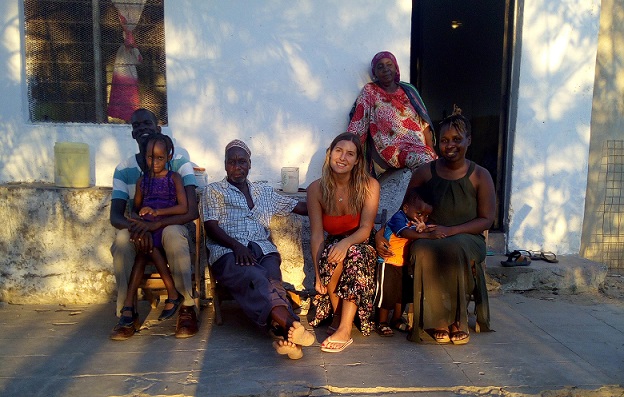
Volunteers are accommodated in volunteers house adjacent to the conservancy staff housing and are provided with their own private room with a bed and beddings. It is exciting to stay close to the rangers and staff, as this is an opportunity to learn the Kenyan way of life apart from the conservation work you get involved in together.
Living is basic, yet still comfortable, the volunteer house have electricity and running water. Volunteers share the flush toilet and bathroom with the rangers. Meals are prepared in a common kitchen by a resident cook and volunteers share meals with the rangers in a common dinning area. the cook is experienced in both international and local cuisines and volunteers food is varied and balanced during the course of their stay.
Bedding is provided, but it is recommended you bring your own towel and toiletries, as well as a sleeping bag if you wish to travel on the weekends.
WiFi is available but to keep connected, you can also purchase a local SIM card with data for an unlocked mobile phone.
Meals
The wide range of Kenyan tribes, ethnicities and cultures are reflected in the diversity of the local cuisine. Volunteers are provided with three meals a day which are served at the accommodation and tend to be rich in carbohydrates.
Breakfast is served around 7am and generally consists of chai tea, toast, fruit and sometimes mandazi – African donuts. A typical lunch can include vegetables with rice, occasional meat and fruit and is served around 1pm. If you are not returning to the accommodation from your work site for lunch, you will need to pack your own lunch in the morning. Dinner is usually served around 8pm and usually includes traditional food, such as ugali, a cornmeal porridge; mboga, a vegetable dish; irio, mashed potatoes with peas and corn; meat and vegetables.
Tap water is not safe to drink in Kenya, though bottled water is readily available. Volunteers typically drink around half a gallon, or two liters per day, which adds up to cost around US$10 a week.
If you have any special dietary requirements, please make a note on your application so arrangements can be made. However, it is important that volunteers should not expect to eat as they normally do at home.
Pricing
Duration |
Program FeeDue 30 days before you start, or within 48 hours
if you register inside of 30 days.
|
|---|---|
| 1 week | $385 |
| 2 weeks | $770 |
| 3 weeks | $1155 |
| 4 weeks | $1540 |
| 5 weeks | |
| 6 weeks | |
| 8 weeks | |
| 10 weeks | |
| 12 weeks |
What is included
- Accommodation
- Meals
- 24/7 in-country support
- In-country program orientation
- Pre-departure support from your Program Manager
- Airport pick-up
- Personalized preparation tools, guides and check lists
- Certificate of International Volunteering
- A 5% international banking fee is added at point of payment.
- Additional things to budget for include: Visa, flights, travel insurance (mandatory), vaccinations, public transport to and from your placement each day, and criminal background check.
- Recommended spending money: Volunteers in Kenya generally find US$150-200 per week to be sufficient for expenses.
Gallery


What to bring
Clothes
– Moisture wicking shirts
– Disposable t-shirts
– Lightweight pants or shorts (when culturally appropriate)
– Clothing with Insect Shield where necessary
– Sturdy shoes
Accessories
– Sunscreen
– Mosquito repellent (possibly with DEET)
– Bandana
– Sunhat
Toiletries
– Shampoo & conditioner
– Toothpaste & toothbrush
– Deodorant
First Aid Kit Additions
– Motion sickness medicine
– Anti-diarrheal medicine
– Ibuprofen
– Antihistamine
– Antibacterial ointment
– Sunburn cream
Travel Essentials
– Reusable water bottle
– Wet wipes & hand sanitizer
– Flash Light